Home
Services
Resources
Methods
About
FAQ
Contact
EN
A space created to foster creativity, emotional balance, self-confidence, and personal development in preschool and school-aged children. Through expressive artistic experiences and respectful support, I contribute to holistic well-being and address the individual adaptation needs children face in preschool or school. At the same time, I offer guidance and support to parents, strengthening family bonds and accompanying them in their children’s emotional growth and development.
When a child faces specific challenges in motor skills, learning, or attention, it is not always possible to provide the individualized attention they need in the classroom. This support is essential so that the child can keep up with the group and develop with joy and self-confidence. I offer this type of assistance by guiding children in their growth and self-exploration through art, within a safe, respectful, and sensitive environment.
I work individually with children through artistic and creative activities, using different forms of expression to help them recognize and express their emotions, strengthen self-esteem, and discover their inner resources. The activities are adapted to each child’s needs, interests, and pace, fostering emotional and personal development.
Guidance and support for parents through creative and artistic experiences, offered individually or in workshops with small groups. These experiences encourage emotional expression, stress release, self-awareness, and the strengthening of inner resources, supporting adults in their personal processes and in the conscious guidance of their children.
Artistic activities stimulate imagination, expression, and children’s emotional balance in a playful and safe way.
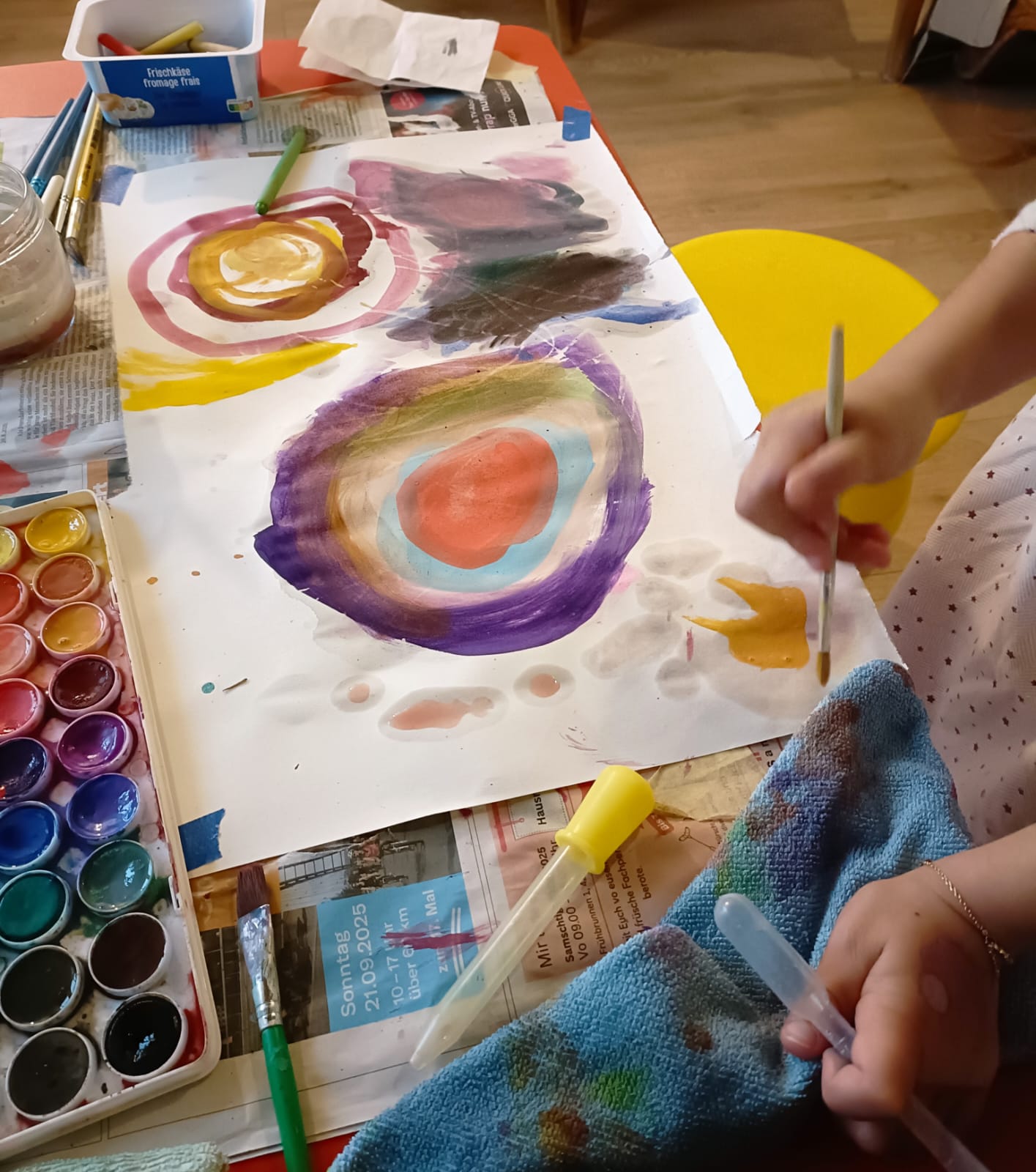
Free painting
Helps children express emotions, relax, and release tension. Encourages creativity, self-confidence, and the ability to make decisions without fear of making mistakes.
Creative drawing
Facilitates emotional expression, imagination, and non-verbal communication. Helps organize thoughts, deal with fears, and strengthen personal identity.
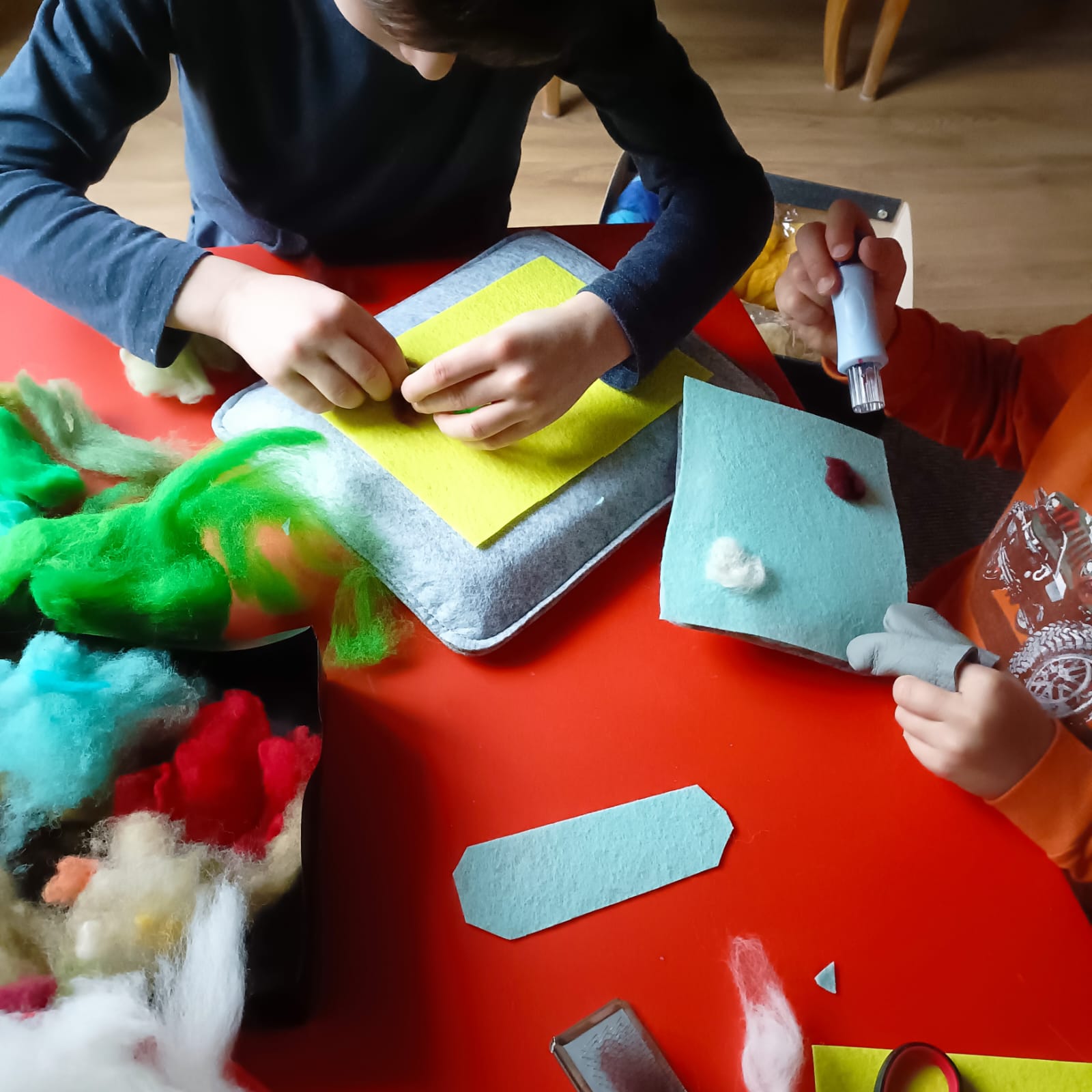
Felting
Promotes concentration, calmness, and inner rhythm. Repetitive work with wool helps regulate attention, increase frustration tolerance, and create a sense of security.
Sewing and embroidery
Encourage patience, planning, and self-esteem. Help children complete tasks, improve sustained attention, and develop confidence in their own abilities.
Collage and music
Support creative and emotional expression through the combination of visual and auditory stimuli, enhancing sensory perception and communication.
Modeling
Enhances fine motor skills, coordination, and body awareness, and helps channel emotions, reduce anxiety, and develop patience and perseverance.
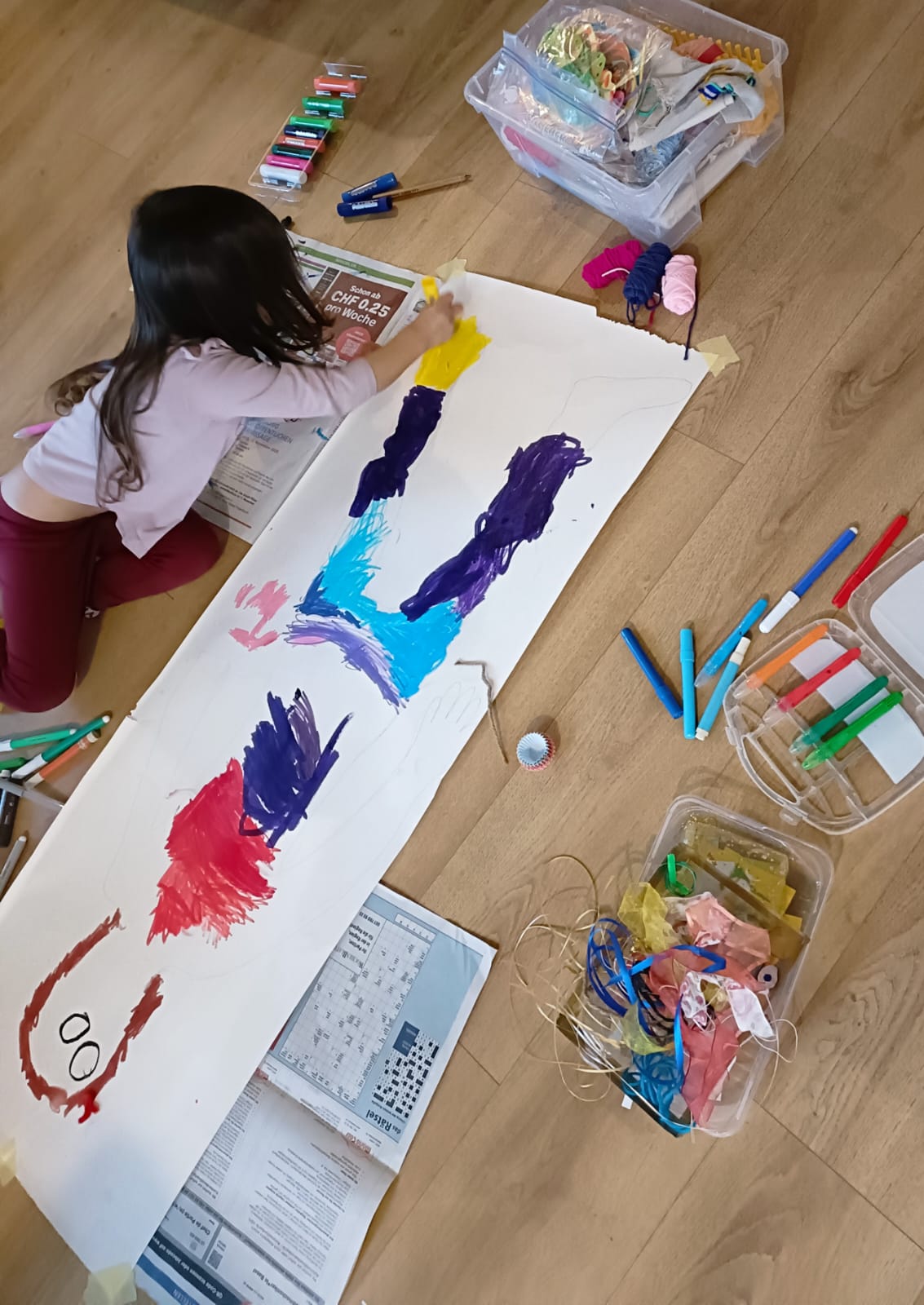
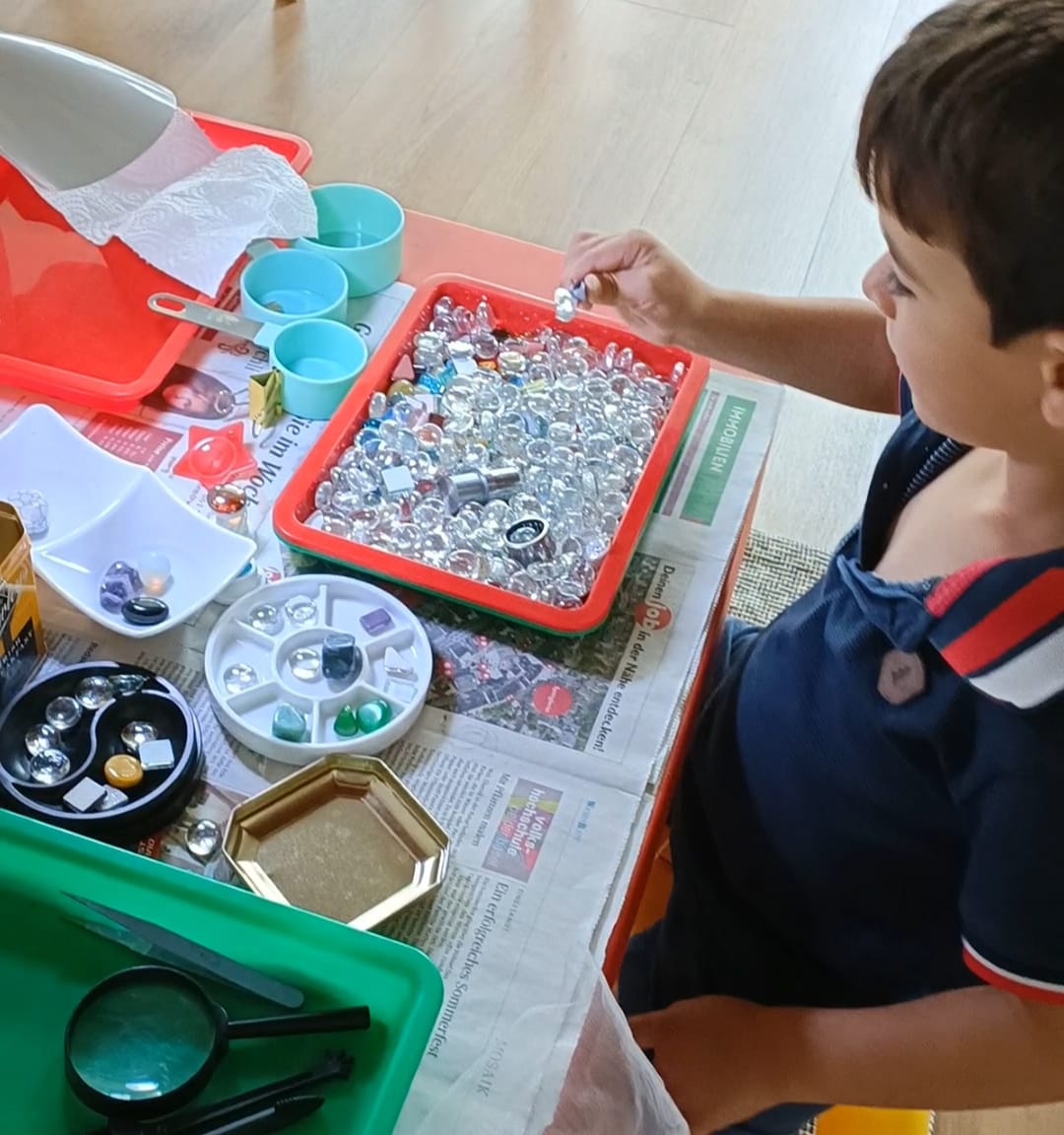
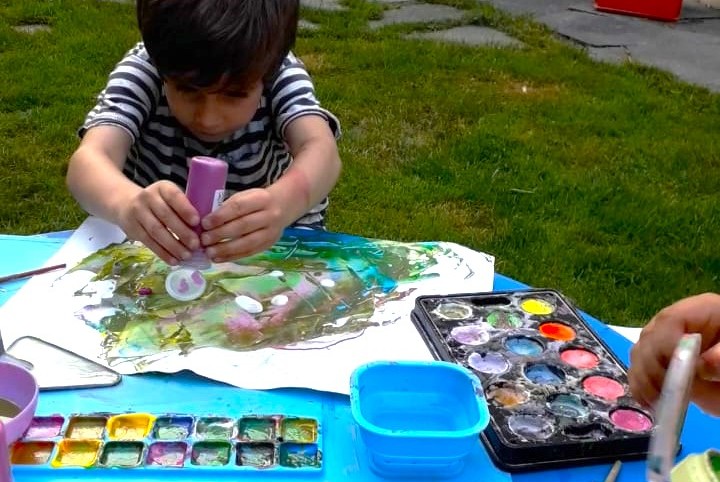
Free drawing and painting
Encourage spontaneous expression of emotions, thoughts, and inner experiences, respecting each person’s pace and uniqueness, without the need for prior artistic skills.
Spontaneous mandala
Offers moments of introspection and emotional balance, supporting inner organization, self-awareness, and connection with one’s own center through free forms and colors.
Neurographik
A creative technique that combines drawing with mindful attention, supporting the release of tension, the reorganization of internal patterns, and the creation of new paths of perception and action.
Art therapy is a form of emotional support that uses art as a means of expression. It focuses on the creative process as a way to explore emotions and regulate the psyche, emphasizing personal experience and the meaning it holds for the creator.
Therapeutic art is a broader and non-clinical term. It refers to artistic activities with a therapeutic focus and does not necessarily imply formal therapy. It also emphasizes process, well-being, emotional expression, self-awareness, and creativity.
Both approaches use creative activities such as drawing, painting, or sculpting to help children, adolescents, and adults express emotions, strengthen self-esteem, and explore new ways of coping with challenges, even when words are not enough.
In a safe and non-judgmental space, the creative process helps reduce stress, improve emotional regulation, concentration, and communication, promoting well-being, self-awareness, and creativity.
Both approaches can be used as preventive support as well as in more intense emotional situations, in cooperation with other professionals such as psychologists or school psychologists.
Although both use art as a tool, art education and art therapy have different goals in child development. Understanding this difference helps schools and families choose the most appropriate approach for each context.
Art education focuses on teaching artistic techniques, languages, and processes. It encourages creativity, cultural awareness, and aesthetic expression within an educational context.
Learning artistic techniques
Exploring colors, shapes, and materials
Developing creativity and motor coordination
Emphasis on outcomes and guided creative processes
Art therapy uses art as a means of emotional expression. The focus is on the child’s inner process, fostering emotional safety, self-awareness, and emotional balance.
Expression of feelings and emotions
Focus on the process, not the final result
Safe and non-judgmental space
Support for emotional and social development
While art education teaches how to create, art therapy helps children understand and express what they feel. Both are valuable and can work together in supporting the child’s holistic development.
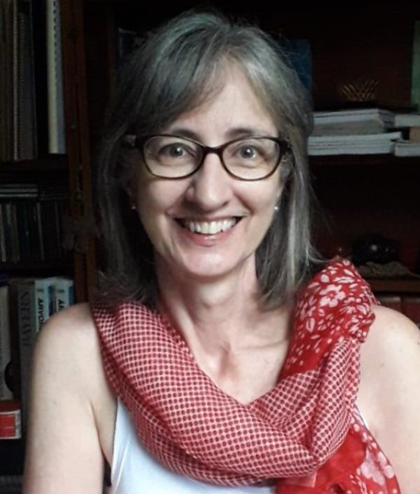
My initial training is as a clarinetist, a profession I have practiced for over 40 years. For more than 25 years, I was part of a professional symphony orchestra, an experience that deeply shaped my personal and artistic journey.
Over time, by combining my musical background with my interest in the visual arts, I discovered artistic expression as a fundamental path to self-awareness, emotional balance, and personal growth. This led me to train in art therapy and various expressive therapies.
Today, I support children, young people, and adults in their personal and creative processes. In a society marked by high demands, speed, and constant stimulation, many people experience difficulties with concentration, emotional regulation, and connection with themselves. Through art, I offer a safe and pressure-free space where they can express themselves freely, develop attention, perseverance, and self-esteem, and find calm, confidence, and a sense of wonder within their own creative process.
Higher Education in Music, Clarinet Major, Hochschule für Musik München, Germany, 1978–1982
Principal Clarinet, Ribeirão Preto Symphony Orchestra (OSRP), Brazil, 1993–2021
Bachelor in Music, Clarinet, University of Costa Rica, 2009
Mandala Therapist, Free Training with Dr. Marina Elisa, Ribeirão Preto, Brasil, 2016–2018
Postgraduate Specialization in Art Therapy and Creativity, NAPE / Faculdade Vicentina de Curitiba (FAV), Brazil, 2018–2020
NeuroGraphik® Specialist, Institut für Kreativitätspsychologie, Switzerland, 2020–2021
Integrative Training in Therapeutic Mandalas and Spirituality, Institute of Psychiatry (IPq), University of São Paulo (USP), Brazil, 2021
Art therapy is a form of emotional support that uses art to help children express their feelings, especially when words are difficult. Through the creative process, they can better understand themselves and regulate their emotions.
Therapeutic art uses artistic activities with a focus on well-being and emotional development. It is not clinical therapy, but a creative space where children can express themselves, relax, and strengthen their self-esteem.
Art therapy is a formal therapeutic process, while therapeutic art focuses on well-being, creativity, and emotional support. In both cases, the child’s creative process is more important than the final result.
Children draw, paint, sculpt, and explore different materials freely or with guidance, depending on their age and needs.
No. Artistic skills are not required. The focus is not on how beautiful the artwork is, but on the child’s experience and personal expression.
Creative work can help children calm down, improve concentration, express emotions, build self-confidence, and develop coping strategies.
It is especially helpful for children with high energy levels, anxiety, frustration, attention difficulties, major changes, or emotionally challenging situations.
Yes. It can be used as preventive support or as a complement to other professional services, such as those provided by psychologists or educational psychologists.
It is a support space for parents that offers experiences through creative and artistic activities, designed to respectfully and consciously support personal and family processes.
Sessions can be individual or offered as workshops in small groups, creating a warm, safe, and trusting environment.
Creative and artistic experiences are offered that encourage emotional expression, stress relief, and connection with each participant’s inner resources.
No. No prior skills are required. The activities focus on the process and personal experience, not on aesthetic results.
It can help express emotions, reduce stress, promote self-awareness, strengthen inner resources, and support children in a more conscious and present way.
No. It is intended for mothers, fathers, caregivers, or responsible adults who wish to support their children from a more conscious perspective.
No. This support does not replace clinical therapy, but it can be an important complement to personal and family well-being.
Kreative Balance - Todos os direitos reservados.